

BY NELLIE NICOLOVA
The Parrish Art Museum establishes a particular way of seeing. Set against the expansive landscape of Water Mill, the Herzog & de Meuron-designed space has long embraced the East End qualities that have drawn artists for generations: light, openness and a close relationship between art and nature. Positioned so its skylights face north like a traditional artist’s studio, the museum allows works to be viewed under the same natural light artists create within.
That atmosphere makes Sanford Biggers: Drift feel especially at home here. On view through Sept. 13, the exhibition transforms the Parrish into an immersive landscape of suspended cloud forms, shifting materials and layered cultural symbolism. Marking Biggers’ first major East End exhibition, Drift spans painting, sculpture, installation, video and performance. Drawing from influences ranging from Buddhism and Los Angeles graffiti culture to Gee’s Bend quilts and African sculpture, the Sag Harbor-connected artist creates works that blur distinctions between past and present.
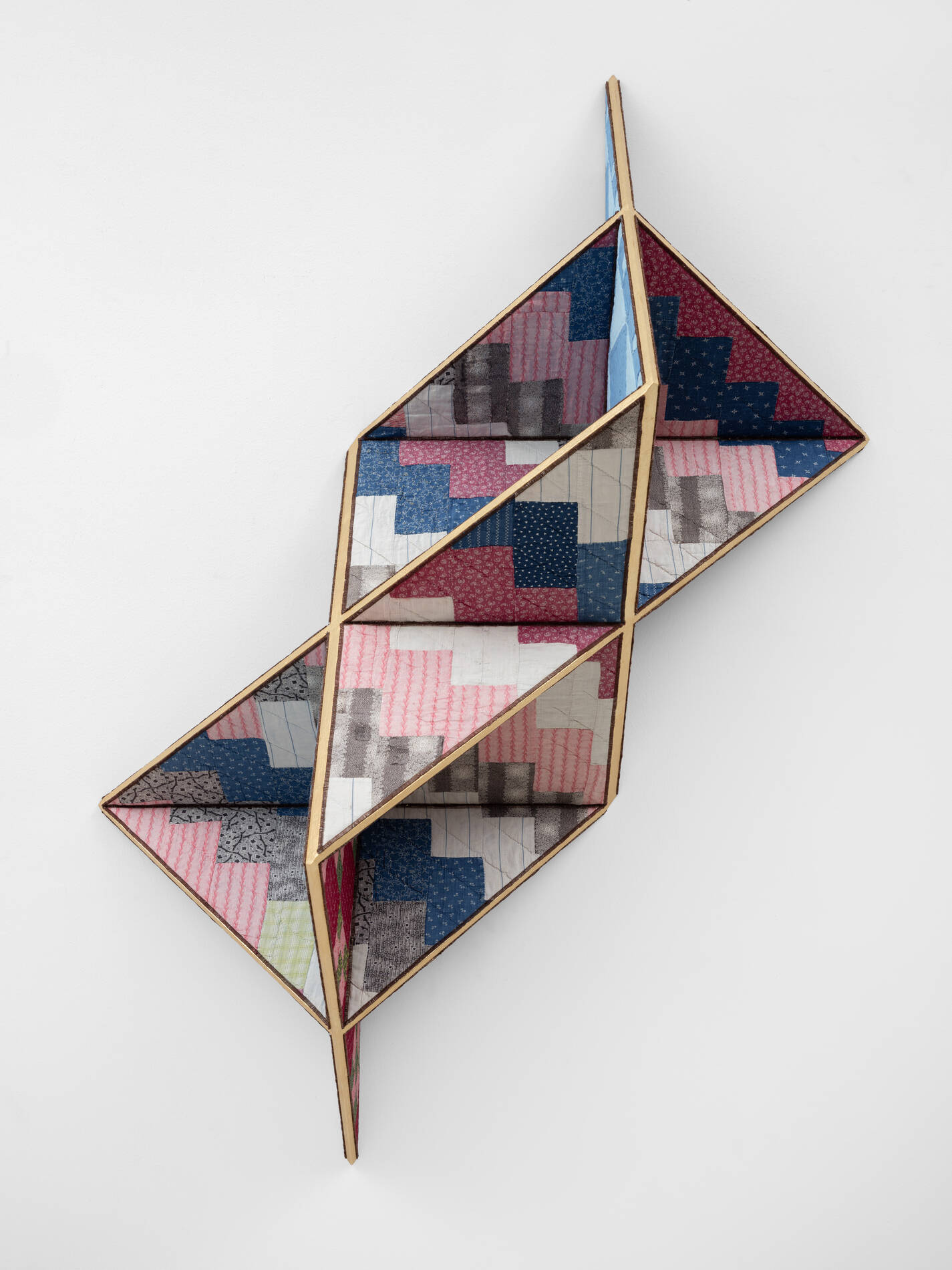 Sanford Biggers, “Also Known As” (2026)
Photo by Daniel Greer/Courtesy of the artist and Marianne Boesky Gallery, New York and Aspen © Sanford Biggers
“Drift invites visitors to consider life, liberty and the pursuit of happiness not as distant principles but as living values,” says Dr. Mónica Ramírez-Montagut, executive director of the Parrish Art Museum.
In the museum’s largest gallery, visitors encounter “Unsui (Cloud Forest),” a monumental installation of illuminated cloud sculptures suspended from the Parrish’s soaring ceilings. Inspired by Biggers’ time in Japan during the early 1990s, the work references a Zen Buddhist philosophy comparing drifting clouds to a life lived without attachment or resistance to change.
“The cloud is an important element in graffiti culture, a symbol of change and nonattachment in Zen Buddhism and an icon of the Hamptons sky,” explains Corinne Erni, the Lewis B. and Dorothy Cullman chief curator of art and education. “We wanted to choreograph an experience where the shimmer clouds in the outside lobby greet the visitor, leading them into ‘Unsui (Cloud Forest),’ where they are invited to sit or lie down on the padded quilts and contemplate the clouds.”
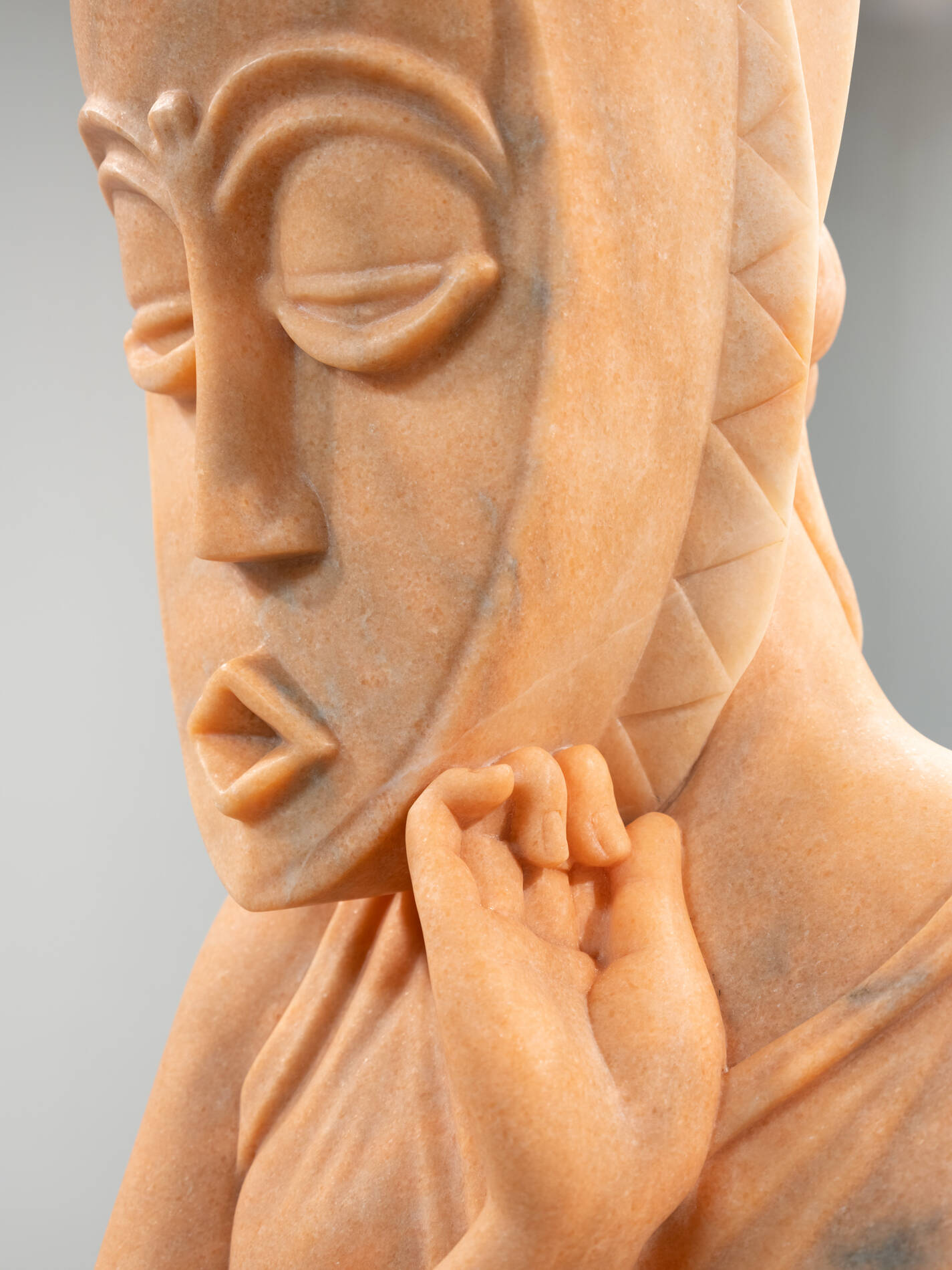 Sanford Biggers, “Mirror” (2024)
Photo by Daniel Greer
That sense of shifting perception persists throughout the exhibition. Works from Biggers’ ongoing Codex series—sculptures and paintings made from repurposed antique quilts layered with spray-painted cloud forms—reference the debated legend of “quilt codes” said to have guided freedom seekers along the Underground Railroad. Nearby, a site-specific sand installation inspired by prayer rugs, breakdance floors and Buddhist mandalas evolves over time, disrupted by movement and softened into painterly abstraction.
That immersive quality reflects a growing appetite for exhibitions that feel experiential rather than purely observational. Visitors move between works that encourage physical engagement as much as contemplation.
“I think audiences are attracted to beauty where they can immerse themselves into a sensory experience,” Ramírez-Montagut says. “People want these different experiences in a museum without dumbing it down.”
Despite its conceptual depth, Drift never feels overly fixed in meaning. Clouds shift between interpretations, sand patterns dissolve, and quilts carry both personal and collective memory. Rather than asking visitors to simply consume images, the exhibition encourages them to move through atmosphere, perception and transformation itself; an experience especially fitting within the expansive light and shifting landscape of the East End. Through Sept. 13, 2026, 279 Montauk Highway, Water Mill
